

Reference feature. Source checked October 13, 2026.
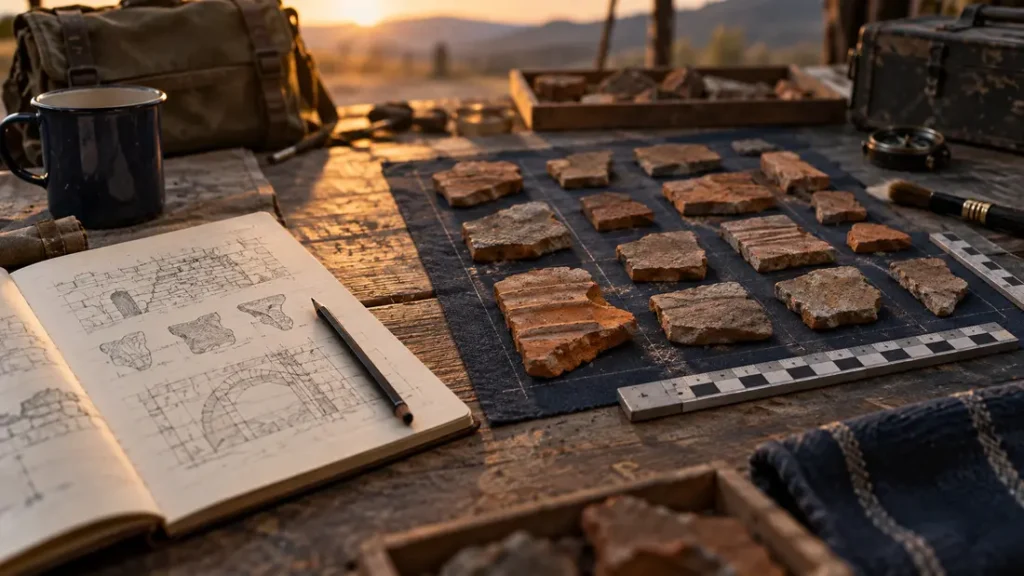
Historic photographs show only part of an industrial landscape. The National Park Service’s account of archaeology at Harpers Ferry explains how later railroad construction buried much of the former armory area beneath fill. Buildings disappeared, materials were reused and the visible landscape changed. The agency acquired part of the former Musket Factory site in 2001, opening a new chapter in its interpretation. National Park Service armory archaeology account.
The same account places the armory within a much longer human history. Archaeological evidence in the area predates the federal factory by thousands of years. Treating the manufacturing period as the only important layer would therefore miss the depth of the landscape and the people who occupied it before industrial development.
For a reader interested in firearms history, archaeology offers a disciplined way to think about context. An object’s significance depends partly on where it was found and what surrounded it. Removing that context can make a striking object less useful as evidence, even when it remains visually impressive. Museum interpretation should make clear which conclusions come from excavation and which come from written records.
Our reading is that an absent building can still support a detailed history when multiple forms of evidence are brought together. Maps, foundations, artifacts and archival accounts need not tell identical stories to be useful; differences can point toward a new research question. Visitors should leave objects and ground features undisturbed and follow site rules. The aim is to understand a shared historical resource, not to turn a visit into an unrecorded search for souvenirs.
Continue reading Firearms History. See our editorial standards for sourcing and image disclosures.
Related reading: Harpers Ferry’s Armory and the Landscape It Changed.
Sources & further reading
Sources reviewed 2026-10-13.
Prepared for Gunfire Magazine with AI assistance from the linked source material and the publication’s editorial brief. This piece does not claim original interviews, on-site reporting or hands-on product testing.