Author: nnachman

  • One Museum Record, Many Historical Questions

    One Museum Record, Many Historical Questions

    A museum label offers a compact introduction, but an online collection record can open a longer investigation. The Smithsonian’s National Museum of American History maintains a record for a Colt Model 1851 Navy revolver, identifying the object and its maker-related information. Explore the museum’s object record. This feature considers the record as a research starting point, not as a product recommendation.

    The first task is to distinguish the individual artifact from the general model. A description of a product family does not necessarily establish the history of the particular object in front of the reader. Provenance, dates and museum identifiers can help keep those layers separate.

    The second task is to notice the questions a record does not answer. How did the object enter the collection? Which parts of its history are documented? What does the museum say about its interpretation or display status? Missing information is not an invitation to invent a romantic story. It is an opportunity to identify a research question and ask the institution about available evidence.

    A magazine can make this process accessible without burying readers in catalogue terminology. A source link, a clear explanation of the object’s documented identity and an honest statement of uncertainty are often enough to show how historical knowledge is built. Where a writer offers an interpretation, it should be recognizable as interpretation.

    The value of a collection record is that it connects an image to an accountable institution and a specific object. Readers can return to it, compare other records and follow later updates. For firearms history, that approach is more reliable than allowing an isolated photograph to carry an elaborate story. The object becomes a doorway into research, with the catalogue providing a visible path rather than an invisible footnote.

    Continue with Special Features and read our editorial standards.
  • Springfield Armory: The Factory Behind the Firearms

    Springfield Armory: The Factory Behind the Firearms

    Reference feature. Source checked October 13, 2026.

    The history of Springfield Armory is a story about a factory as much as a firearm. The National Park Service traces the federal armory to 1794 and its military production through 1968. Its historical significance includes precision manufacturing, mechanization and the development of interchangeable parts. Those themes place the site inside a wider account of American industry, rather than reducing its story to a sequence of famous models. National Park Service site history.

    The park describes how difficulties supplying and repairing individually made arms during the War of 1812 helped drive manufacturing change. Standardization promised a different relationship between a finished product and its replacement components. Springfield also affected the city around it, linking national military demand to local work and industrial growth.

    For a museum visitor, that context suggests a useful way to look at the collection. Spend time on the production story accompanying an object: who made it, what machinery was involved, and what the institution was trying to achieve. A manufacturing milestone becomes easier to understand when it is connected to the working environment that made it possible.

    Our reading is that industrial history adds depth to collecting without requiring every object to be rare. An ordinary production example can invite substantial questions about standardization, skilled labor and public investment. Keep identification, historical significance and market value separate in your notes; each calls for different evidence. This is a historical overview, not a current product review or a claim that a modern company and the former federal facility are interchangeable institutions.

    Continue reading Firearms History. See our editorial standards for sourcing and image disclosures.

    Related reading: John Hall and the Pursuit of Interchangeable Parts.

  • What Springfield’s Main Arsenal Reveals About a Collection

    What Springfield’s Main Arsenal Reveals About a Collection

    Reference feature. Source checked October 13, 2026.

    A museum building can be part of the collection it houses. Springfield Armory’s Main Arsenal was constructed between 1847 and 1850, according to the National Park Service. The building replaced three earlier storage buildings, and its spacious interior could accommodate as many as 300,000 firearms. That scale makes the structure a record of logistics, not simply an architectural backdrop for display cases. National Park Service Main Arsenal history.

    The park documents changes in how the arsenal worked, including the move from large racks to crates after the Civil War. Later alterations included utilities, elevators and interior finishes. After the armory closed in 1968, the building even housed a television studio for a period. Its current museum role is one stage in a much longer working life.

    This is a useful corrective to the temptation to imagine historic places frozen in a single year. Ask which features belong to the original construction and which answer later needs. A historic photograph may show a different facade, room arrangement or circulation pattern without either version being inaccurate. The date attached to the photograph is part of its evidence.

    When planning a history visit, give yourself time to look beyond the most recognizable exhibit. Doors, windows, floor levels and the relationship between buildings can prompt questions that a catalog entry cannot answer alone. Our recommendation is to record those questions and compare them with the park’s interpretation afterward. That approach turns a visit into a small research exercise while avoiding unsupported conclusions about details that merely look old.

    Continue reading Firearms History. See our editorial standards for sourcing and image disclosures.

    Related reading: What Archaeology Adds to Armory History.

  • The Women Who Helped Keep Springfield Armory Running

    The Women Who Helped Keep Springfield Armory Running

    Reference feature. Source checked October 13, 2026.

    Springfield Armory’s wartime story cannot be told only through its finished products. The National Park Service reports that women made up 45 percent of the workforce at the armory’s wartime peak: 5,210 workers. Its account connects their contribution to an expanded production effort during World War II and to the factory’s existing mechanization and division of labor. National Park Service Woman Ordnance Workers history.

    The War Department’s Woman Ordnance Worker program gave that work a public identity through posters, badges, hats and bandanas. The park also notes a practical role for hair coverings around moving machinery. These surviving objects carry evidence of both workplace needs and the effort to give workers a sense of participation in the larger war effort.

    A labor-centered approach changes what deserves attention in a firearms history display. A photograph of a production line, a time record or an employee publication may reveal an aspect of the story that a firearm alone cannot. The object remains important, but it becomes one part of a network of people, schedules, tools and institutional decisions.

    Readers researching a family connection should begin with names, dates and the institution that holds the relevant records. Avoid assuming that a uniform or factory setting identifies an individual’s precise duties. Our editorial view is that the strongest personal histories distinguish documented work from family recollection while preserving both. Giving workers their own place in the narrative makes the history more specific and more human, and it helps resist the easy habit of crediting every industrial achievement to a single inventor.

    Continue reading Firearms History. See our editorial standards for sourcing and image disclosures.

    Related reading: John Garand’s Career Before and Beyond the M1.

  • Coltsville Was More Than a Factory

    Coltsville Was More Than a Factory

    Reference feature. Source checked October 13, 2026.

    The National Park Service describes Coltsville as an industrial community as well as a manufacturing enterprise. Samuel Colt’s Hartford complex brought together precision machining, interchangeable parts and assembly-line production. Its story also includes worker housing, educational opportunities and social spaces. Looking at that larger setting broadens a familiar firearms name into a subject of urban and industrial history. National Park Service Coltsville history.

    The park records that Elizabeth Colt became the complex’s sole owner after Samuel’s death in 1862 and owned the company for the following 39 years. It distinguishes ownership and oversight from daily management. The same account connects manufacturing techniques associated with Colt to other products, including sewing machines, bicycles and typewriters.

    For readers, that distinction between an inventor, an owner and a manufacturing organization is especially useful. A company’s continuity depends on more than the biography of its founder. Buildings, capital, managers and workers all belong in the account. Treat a famous signature as a starting point for research, rather than the end of the explanation.

    Our suggested reading exercise is to compare three kinds of evidence: a product description, a photograph of the district and a biographical account. Each answers a different question. The product may explain what was sold; the district shows where people worked and lived; the biography helps explain decisions and relationships. Together they support a richer understanding of industrial change. They also discourage the assumption that a technology’s influence ends with the category of object that first made it famous.

    Continue reading Firearms History. See our editorial standards for sourcing and image disclosures.

    Related reading: The Blue Dome: Architecture as Industrial Branding.

  • The Blue Dome: Architecture as Industrial Branding

    The Blue Dome: Architecture as Industrial Branding

    Reference feature. Source checked October 13, 2026.

    An industrial landmark can advertise without a billboard. The National Park Service describes the blue, star-covered dome at Coltsville as a recognizable part of Hartford’s skyline and a symbol of the Colt enterprise. The original dome crowned the East Armory in 1855. It was lost when a fire destroyed that armory in February 1864. National Park Service Blue Onion Dome history.

    The park’s account connects the design to Samuel Colt’s travels and marketing, while describing the architectural attribution and inspiration with appropriate uncertainty. The rearing colt was also a visual play on his name. This is an example of historical interpretation in which an arresting image is well documented but some details about its origin remain less definite.

    That difference matters when telling a brand’s history. A plausible explanation should not become a proven fact through repetition. Words such as attributed, believed and documented are useful tools for keeping the strength of the evidence visible. They need not make a story less interesting; uncertainty can identify the very question that deserves further research.

    Readers can apply the same approach to trademarks, packaging and presentation pieces. Ask when a symbol appeared, where it was used and which surviving source supports the explanation of its meaning. Our interpretation is that architecture deserves a place alongside catalogs and advertisements when studying industrial identity. A building can communicate ambition to employees, neighbors and customers at once. Consult the park’s current visitor guidance before planning access; a landmark’s visual prominence does not itself mean its interior is open for tours.

    Continue reading Firearms History. See our editorial standards for sourcing and image disclosures.

    Related reading: Coltsville Was More Than a Factory.

  • Harpers Ferry’s Armory and the Landscape It Changed

    Harpers Ferry’s Armory and the Landscape It Changed

    Reference feature. Source checked October 13, 2026.

    Harpers Ferry’s position between rivers belongs at the center of its armory story. The National Park Service describes George Washington’s selection of the location for the second national armory after Springfield. Construction began in 1799. The institution grew from a modest early workforce into a much larger industrial operation, while problems with waterpower and management complicated its development. National Park Service Harpers Ferry Armory history.

    The park’s history highlights a major renovation between 1845 and 1854, including new workshops, machinery and changes to the canal. Civil War destruction then transformed the site again. By the war’s end, the armory’s fire engine and guard house, associated with John Brown’s raid, was the only intact building remaining from the complex.

    This sequence makes the armory a useful case study in the difference between a location and the buildings that once occupied it. A visitor may encounter a landscape whose most important historical features are absent, buried or represented through interpretation. The lack of an intact factory is itself part of the story, rather than a reason to ignore the industrial past.

    Our recommendation is to approach such sites with a dated plan or map alongside the narrative. Compare where water, transport routes and production buildings once stood, then ask how later construction changed the view. Keep the surviving structure’s role distinct from the history of the whole complex. That method helps readers understand why a small remnant can become a powerful public symbol while still representing only a fraction of the work and activity that once surrounded it.

    Continue reading Firearms History. See our editorial standards for sourcing and image disclosures.

    Related reading: What Archaeology Adds to Armory History.

  • What Archaeology Adds to Armory History

    What Archaeology Adds to Armory History

    Reference feature. Source checked October 13, 2026.

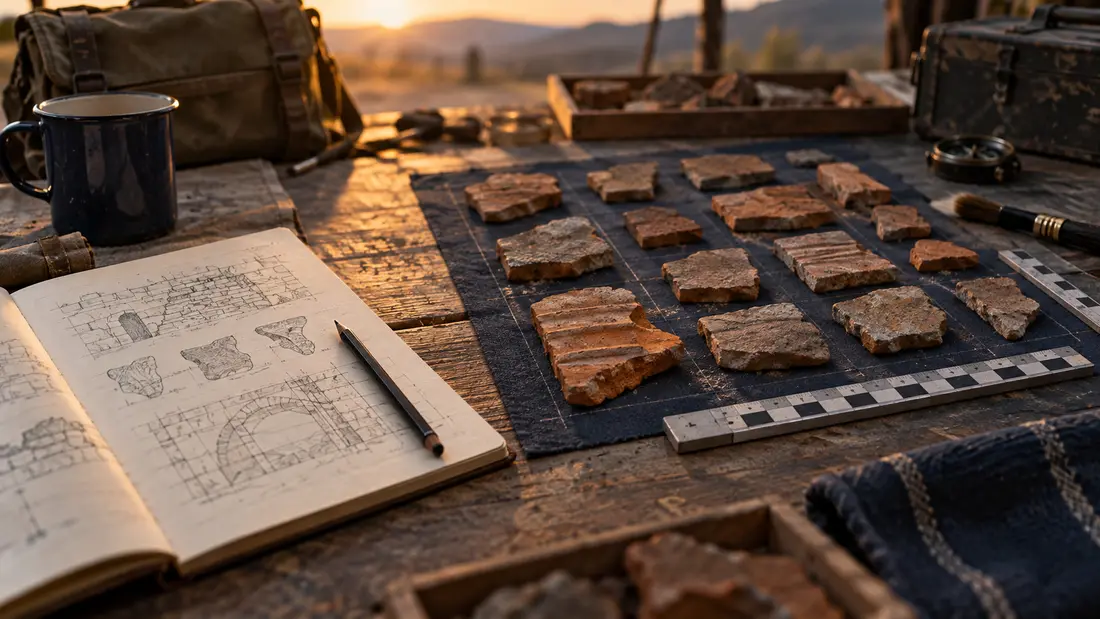
    Historic photographs show only part of an industrial landscape. The National Park Service’s account of archaeology at Harpers Ferry explains how later railroad construction buried much of the former armory area beneath fill. Buildings disappeared, materials were reused and the visible landscape changed. The agency acquired part of the former Musket Factory site in 2001, opening a new chapter in its interpretation. National Park Service armory archaeology account.

    The same account places the armory within a much longer human history. Archaeological evidence in the area predates the federal factory by thousands of years. Treating the manufacturing period as the only important layer would therefore miss the depth of the landscape and the people who occupied it before industrial development.

    For a reader interested in firearms history, archaeology offers a disciplined way to think about context. An object’s significance depends partly on where it was found and what surrounded it. Removing that context can make a striking object less useful as evidence, even when it remains visually impressive. Museum interpretation should make clear which conclusions come from excavation and which come from written records.

    Our reading is that an absent building can still support a detailed history when multiple forms of evidence are brought together. Maps, foundations, artifacts and archival accounts need not tell identical stories to be useful; differences can point toward a new research question. Visitors should leave objects and ground features undisturbed and follow site rules. The aim is to understand a shared historical resource, not to turn a visit into an unrecorded search for souvenirs.

    Continue reading Firearms History. See our editorial standards for sourcing and image disclosures.

    Related reading: Harpers Ferry’s Armory and the Landscape It Changed.

  • John Hall and the Pursuit of Interchangeable Parts

    John Hall and the Pursuit of Interchangeable Parts

    Reference feature. Source checked October 13, 2026.

    John H. Hall’s historical importance extends beyond the design of a single firearm. The National Park Service records his 1819 contract with the War Department and his work at Harpers Ferry to produce rifles with interchangeable parts. Establishing the workshops and precision machinery required years of effort. The central problem was consistency across production, rather than merely completing one successful example. National Park Service John H. Hall biography.

    The park describes Hall’s development of specialized machinery and places his work within the emergence of the American factory system. Its account also preserves contemporary assessments of the uniformity he achieved. Those assessments are useful evidence of what industrial officials considered important at the time: repeatability, quality and reduced dependence on individual fitting.

    This history invites a different question from the familiar search for who invented a particular object first. How did an organization learn to reproduce a design reliably? A prototype can demonstrate an idea; a production system must sustain that idea across many examples. Those are related achievements, but they are not the same achievement.

    For readers evaluating historical claims, look for evidence about both invention and manufacture. Patents, contracts, inspection accounts and surviving objects may illuminate different stages of the process. Our interpretation is that Hall’s story is especially valuable because it makes the factory itself visible as an intellectual accomplishment. The methods behind a collection deserve attention alongside the finished objects. This feature does not provide manufacturing instructions; it offers a framework for understanding why precision and standardization occupy such a large place in industrial history.

    Continue reading Firearms History. See our editorial standards for sourcing and image disclosures.

    Related reading: Springfield Armory: The Factory Behind the Firearms.

  • John Garand’s Career Before and Beyond the M1

    John Garand’s Career Before and Beyond the M1

    Reference feature. Source checked October 13, 2026.

    The National Park Service’s biography of John Garand begins far from a famous military rifle. Born in Quebec in 1888, he moved to the United States as a child and worked in a textile mill. Early experience with industrial processes, tools and measurement preceded his career at Springfield Armory. That background gives his later work a broader industrial context. National Park Service John Garand biography.

    The park dates the Army’s adoption of the M1 to 1936 and Garand’s retirement from federal service to 1953. It also describes his work on tools, gauges and production processes. These contributions can be overshadowed by the product that bears his name, even though they help explain the kind of engineer he became.

    A biography centered only on the best-known invention can make a career look inevitable. Reading the earlier chapters restores contingency: skills learned in one setting may become useful in another, and practical work can shape an inventor’s interests. The point is not to claim a simple causal chain for every later decision, but to notice the range of experience behind the achievement.

    Our suggested approach is to build a small timeline with separate entries for employment, patents, institutional adoption and retirement. That keeps an individual’s career from collapsing into a single product date. It also makes room to ask which accomplishments belonged to the person and which required a larger organization. For collectors and general readers alike, this more complete biography can deepen appreciation without turning admiration into an unsupported claim that one individual alone created an entire production system.

    Continue reading Firearms History. See our editorial standards for sourcing and image disclosures.

    Related reading: Why Experimental Firearms Belong in the Museum Story.