

Reference feature. Source checked October 13, 2026.
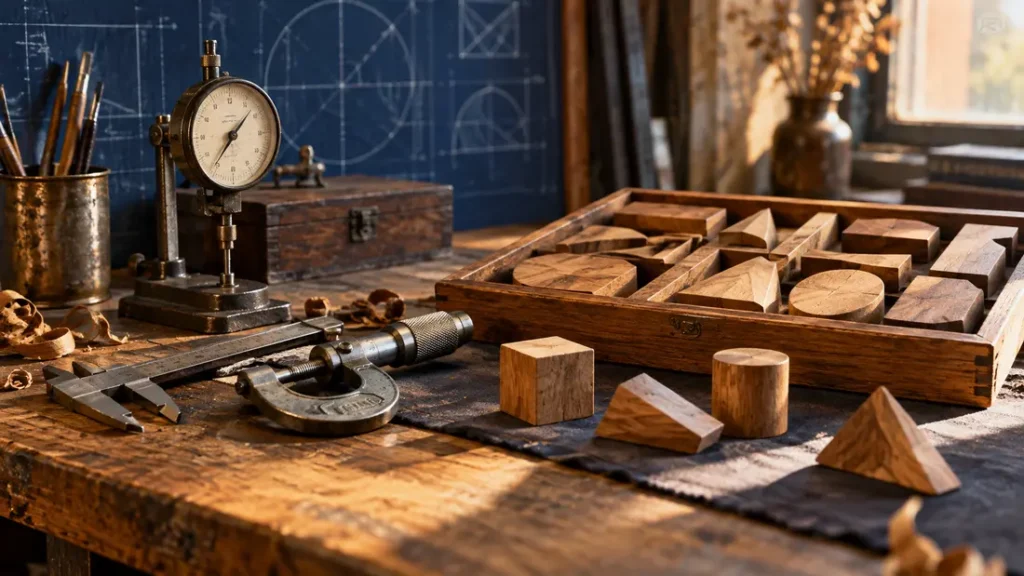
John H. Hall’s historical importance extends beyond the design of a single firearm. The National Park Service records his 1819 contract with the War Department and his work at Harpers Ferry to produce rifles with interchangeable parts. Establishing the workshops and precision machinery required years of effort. The central problem was consistency across production, rather than merely completing one successful example. National Park Service John H. Hall biography.
The park describes Hall’s development of specialized machinery and places his work within the emergence of the American factory system. Its account also preserves contemporary assessments of the uniformity he achieved. Those assessments are useful evidence of what industrial officials considered important at the time: repeatability, quality and reduced dependence on individual fitting.
This history invites a different question from the familiar search for who invented a particular object first. How did an organization learn to reproduce a design reliably? A prototype can demonstrate an idea; a production system must sustain that idea across many examples. Those are related achievements, but they are not the same achievement.
For readers evaluating historical claims, look for evidence about both invention and manufacture. Patents, contracts, inspection accounts and surviving objects may illuminate different stages of the process. Our interpretation is that Hall’s story is especially valuable because it makes the factory itself visible as an intellectual accomplishment. The methods behind a collection deserve attention alongside the finished objects. This feature does not provide manufacturing instructions; it offers a framework for understanding why precision and standardization occupy such a large place in industrial history.
Continue reading Firearms History. See our editorial standards for sourcing and image disclosures.
Related reading: Springfield Armory: The Factory Behind the Firearms.
Sources & further reading
Original source publication: 2019-09-23.
Sources reviewed 2026-10-13.
Prepared for Gunfire Magazine with AI assistance from the linked source material and the publication’s editorial brief. This piece does not claim original interviews, on-site reporting or hands-on product testing.