

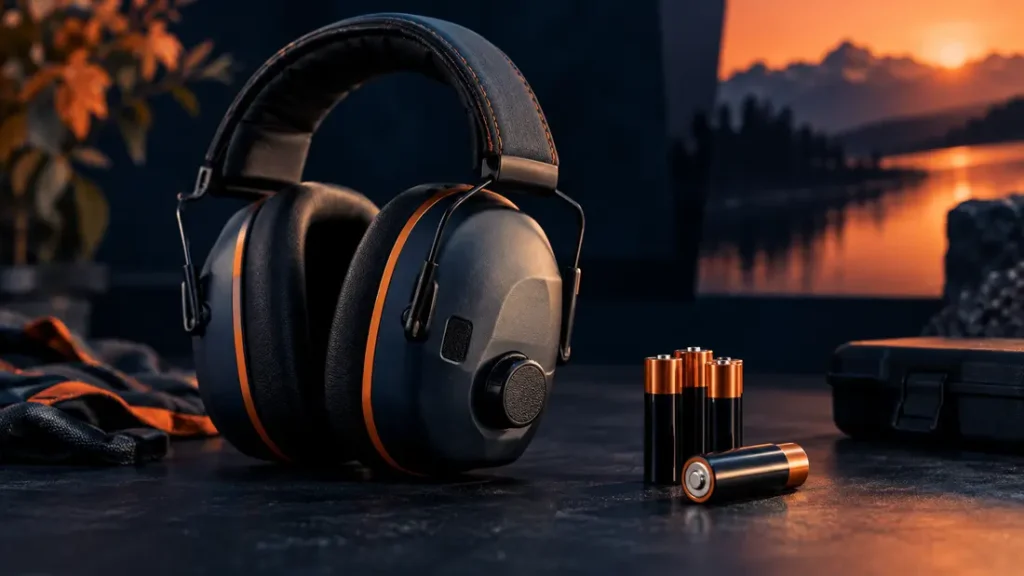
Electronic controls can dominate the conversation about hearing protection. Battery life, microphones, connectivity and buttons are easy to describe and photograph. They do not, by themselves, answer the protective-performance question. This source-based article outlines a responsible way to read such reviews; no device has been tested or rated here.
NIOSH distinguishes hearing-protector types and describes specialized features such as sound restoration and communication technologies. It also cautions that active noise cancellation alone should not be treated as hearing protection without the relevant labeling. NIOSH’s hearing-protection guidance supplies the underlying distinction.
An editorial evaluation should give each claim its own evidence. Battery endurance requires a stated observation period and conditions. Control usability calls for a description of who tried the interface and what they did. A protection claim requires suitable technical documentation and assessment. Combining all three into one enthusiastic adjective conceals more than it explains.
For readers, the most revealing part of a review may be its treatment of failure and uncertainty. Does it explain what the instructions say when power is unavailable? Does it distinguish a manufacturer statement from something the reviewer independently established? Does it describe compatibility limits without turning one individual’s experience into a universal judgment?
A strong article would also resist rewarding unnecessary complexity. Features deserve attention when the evidence explains their purpose and limits, not merely because they increase a specification count. The right editorial conclusion might be that a question remains open pending proper evaluation. That is more useful than presenting electronics as a shortcut around fit, consistent use and a setting-specific assessment of protective needs. Read the documentation and consult qualified guidance for the environment in which protection will be used.
Continue with Product Reviews and read our editorial standards.
Sources & further reading
Original source publication: 2024-01-31.
Sources reviewed 2026-10-13.
Prepared for Gunfire Magazine with AI assistance from the linked source material and the publication’s editorial brief. This piece does not claim original interviews, on-site reporting or hands-on product testing.