

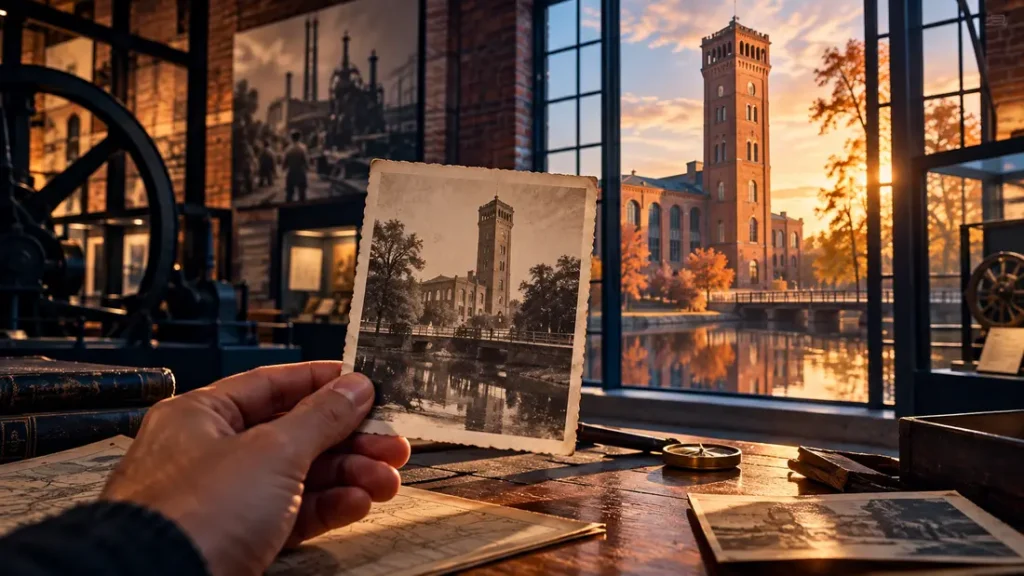
Springfield Armory’s Main Arsenal is more than a backdrop for the collection inside it. According to the National Park Service, the building was constructed between 1847 and 1850 and later underwent changes in storage systems, utilities and interior use. Its history continued after the armory closed. Read the NPS building history.
That sequence offers a useful way to approach an industrial landmark. Rather than imagine a historic building as frozen at one famous moment, readers can look for layers of adaptation. A structure can preserve evidence of changing work, technology and public purpose even when its outward shape remains familiar.
An architectural feature does not explain itself. A tower, opening or altered floor plan becomes meaningful when connected to documents and a reliable chronology. Photographs from different periods can help, but captions must establish their dates and viewpoints. Without that context, an attractive comparison can imply a change that the evidence does not support.
For visitors, the most rewarding questions may concern the relationship between the building and the surrounding community. How did people enter it? How did its purpose change? Which parts of the site were retained, adapted or interpreted for a new audience? A museum visit can become an inquiry into the place rather than simply a walk past objects.
This source-based feature does not claim an on-site architectural survey. It draws attention to the NPS’s published account and suggests a reading method: treat the building as evidence, then follow that evidence into records. Firearms heritage includes the spaces where work happened and the later choices that preserved them. Looking at those spaces carefully gives readers a broader story of labor, civic identity and the changing meaning of an industrial landscape.
Continue with Special Features and read our editorial standards.
Prepared for Gunfire Magazine with AI assistance from the linked source material and the publication’s editorial brief. This piece does not claim original interviews, on-site reporting or hands-on product testing.