

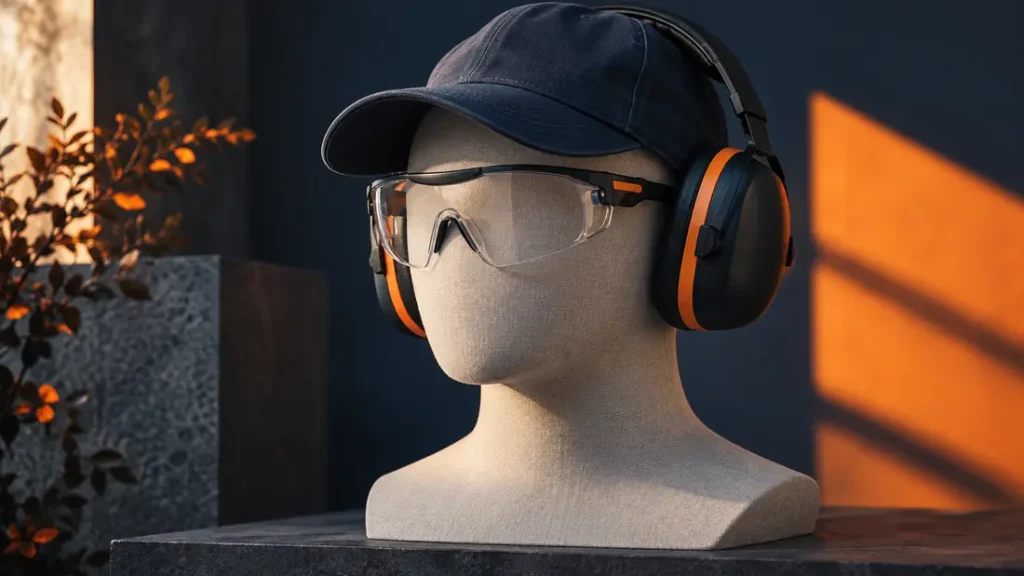
A review photograph often isolates a product against a clean background. Real use is less tidy: glasses, hearing protection, headwear and prescription needs can overlap. Evaluating only one item may miss the question a reader actually faces—whether the complete combination works appropriately for that person and setting.
OSHA’s protective-equipment guidance discusses fit and compatibility, noting that different protective items may interfere with one another. Its selection guide is not a substitute for a complete assessment of the hazards involved. Read OSHA’s chapter on protective equipment. This article applies that general principle to review methodology, not to a tested product combination.
An editor can make coverage more useful by asking the reviewer to describe the full configuration. Which other items were worn? Was prescription eyewear involved? Were adjustments made under the manufacturer’s instructions? Clear records prevent an isolated observation from being mistaken for a guarantee that every combination will behave the same way.
Photographs have a role, too. They can show the context of an actual documented evaluation, with consent and accurate captions. A conceptual illustration can introduce the topic but cannot establish fit or protection. Readers should be able to tell which kind of image they are seeing without having to inspect fine print.
The best conclusion is specific to the evidence. A reviewer may report that a combination felt uncomfortable to them after a stated period; that observation should not become a universal technical verdict. Conversely, a comfortable combination has not automatically proved adequate protection. Keeping those statements separate creates a more useful review and encourages readers to check their own needs with qualified professionals. Compatibility belongs in the main evaluation, alongside the product’s advertised features, because the equipment will ultimately be used as part of a system.
Continue with Product Reviews and read our editorial standards.
Sources & further reading
Sources reviewed 2026-10-13.
Prepared for Gunfire Magazine with AI assistance from the linked source material and the publication’s editorial brief. This piece does not claim original interviews, on-site reporting or hands-on product testing.