

RESEARCH-BASED PRODUCT FEATURE
Based on published manufacturer specifications. Gunfire Magazine has not physically tested this product for this article.
The Mechanics of Long-Term Security
For the dedicated firearm owner, the conclusion of national safety awareness campaigns often marks a transition point in the calendar. While organized events like the semi-annual Gun Storage Check Week, observed each year from June 1-7 and September 1-7, provide critical windows to assess security measures, the reality of responsible ownership requires a consistent, year-round commitment. As noted by the National Shooting Sports Foundation, the goal of these campaigns is to encourage owners to check their storage practices and, if necessary, take action to ensure everything remains secure. However, as we move into November, the focus must shift from the initial verification of security to the ongoing maintenance of the infrastructure that provides it.
Storage solutions, whether they are high-capacity safes, lockboxes, or cable-style security devices, are mechanical systems. Like any piece of equipment, they are subject to wear, environmental degradation, and the shifting needs of a household. By establishing a November reset, you create a buffer against the wear and tear that can accumulate over time, ensuring that your storage solutions remain effective, accessible, and reliable. This process is essential for anyone who takes the stewardship of their equipment seriously. For a deeper look at how to structure these checks, Autumn Maintenance: A Seasonal Protocol for Gear Longevity provides a framework for evaluating the condition of your gear as the seasons change.
Managing the Internal Storage Climate
Beyond the hardware, the environment within your storage space plays a critical role in the maintenance of your equipment. A safe or cabinet is not a hermetically sealed environment, and it is susceptible to the same fluctuations in temperature and humidity that affect the rest of your home. As detailed in The Autumn Audit: Refreshing Your Storage Routine, the internal climate is a key factor in preventing corrosion and ensuring the longevity of both the storage unit and the items kept within it. If you utilize desiccants, silica gel packs, or electric dehumidifier rods, November is the ideal time to verify their status.
Silica packs, for instance, often require recharging by heating them according to manufacturer specifications, and electric dehumidifier rods should be checked for consistent warmth and electrical continuity. Furthermore, space management is equally important. A cluttered storage environment is inherently less secure, as it can impede the proper closure of the door or make it difficult to verify that all items are accounted for. Use this November reset to reorganize your storage space. Ensure that there is adequate airflow around your equipment, and remove any non-essential items that have accumulated over the year. By maintaining a clean, organized, and climate-controlled storage space, you reinforce the effectiveness of your security measures and protect the long-term value of your collection.
Establishing a Sustainable Verification Rhythm
A comprehensive maintenance protocol begins with a physical audit of the storage hardware itself, distinct from the initial installation. This process focuses on the longevity of the security apparatus. Whether you rely on high-capacity safes, lockboxes, or cable-style security devices, the mechanical components require periodic attention. November is an ideal time to perform a tactile inspection: test the movement of the door, ensure that the locking bolts engage smoothly without resistance, and verify that the electronic keypad or biometric scanner is functioning without delay. The NSSF emphasizes that because people's lives change, all gun owners should periodically review their storage practices to ensure they remain effective at preventing unauthorized access, theft, or accidents, as outlined at Gun Storage Check Week • NSSF.
For those utilizing electronic locks, this seasonal reset should include a proactive battery management strategy. Electronic systems are efficient, but they are dependent on power. Waiting for a low-battery indicator to appear is a reactive approach that can lead to unnecessary stress during a moment of need. Instead, adopt a schedule where batteries are replaced annually, regardless of their perceived charge level. Furthermore, ensure that backup keys are kept in a separate, known location that is both secure and accessible to authorized users. This physical audit ensures that your storage infrastructure is not just present, but fully operational.
Safety education is also a continuous process. Organizations like Project ChildSafe provide essential resources for communities, and their work highlights that secure gun storage can prevent access by children, theft, or unauthorized use by a person who may pose a danger to themselves or others, as noted on their Homepage – Project Childsafe. By treating storage maintenance as a regular, scheduled task, you are not just caring for equipment; you are actively participating in a culture of responsibility. This mindset extends to every member of the household, reinforcing the importance of secure storage as a foundational element of firearm ownership. Whether you are a new owner or an experienced marksman, the discipline of a November maintenance reset ensures that your commitment to safety remains as steady and reliable as the equipment you safeguard.
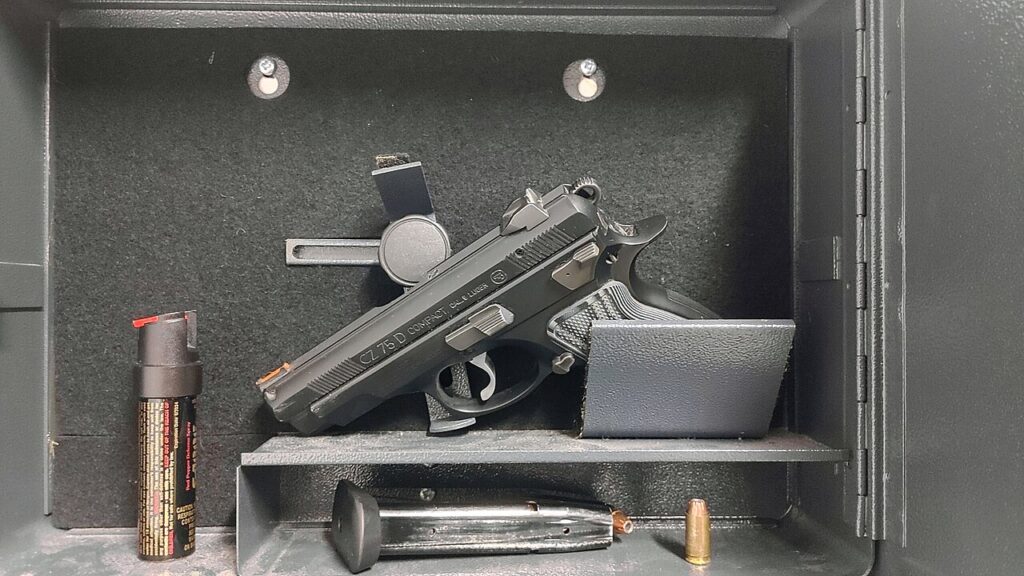
Representative photo illustrating a secure storage environment, highlighting the interior organization and accessibility necessary for maintaining a responsible firearm storage protocol. Photo: Cimmerian praetor / Wikimedia Commons · CC BY-SA 4.0. Resized for display. Sources checked October 29, 2026.

Sources & further reading
Sources reviewed 2026-10-28.
Prepared for Gunfire Magazine with AI assistance from the linked source material and the publication’s editorial brief. Specifications and manufacturer claims are attributed to their original sources.