

As the autumn months bring a transition in outdoor activities, many enthusiasts find themselves shifting their focus from the field to the study. This period offers a unique opportunity to engage with the historical record, moving beyond the immediate use of equipment to explore the complex narratives of technological and social development. Understanding the history of firearms requires a structured approach, looking past the surface of an object to grasp its full context, as discussed in Beyond the Display: How Provenance Reveals History. By visiting museums and reviewing primary documents, researchers can uncover the story behind the steel, a concept explored further in The story behind the steel.
The Archive as Industrial Evidence
Museums serve as essential repositories for understanding the evolution of manufacturing. The Cody Firearms Museum, for instance, houses more than 7,000 firearms and related artifacts that chronicle the technological development of firearms from the earliest incarnations to modern forms, according to their Collections - Cody Firearms Museum - Buffalo Bill Center of the West. This collection provides more than just a visual history; it offers evidence of how the needs of the arms industry drove the development of mass production and interchangeable parts. These techniques, often referred to as "universal manufactures," were initially applied to create affordable and identical firearms, eventually influencing the production of the majority of consumer goods available worldwide.
The Springfield Armory National Historic Site offers a similar, yet distinct, perspective on American industrial heritage. Established in 1794 under George Washington, the armory operated as the nation's first federal arsenal for 174 years. As noted by the Springfield Armory National Historic Site (U.S. National Park Service), the site was a leader in the development of interchangeability, mechanization, and the specialization of precision manufacturing. The lessons learned from the War of 1812, which highlighted the difficulties of repairing individually crafted muskets, were instrumental in driving the armory to modernize its manufacturing methods. By World War II, the facility had expanded from a small operation employing a few hundred workers to a massive industrial hub with over 14,000 employees, including more than 5,000 women, all dedicated to the production of small arms.
Human Stories in the Machine Age
While the focus of industrial history is often on production totals and manufacturing techniques, the human element remains central to understanding these developments. The career of John Garand, the inventor of the M1 rifle, serves as an excellent case study of this human-centered history. According to the John Garand - Springfield Armory National Historic Site (U.S. National Park Service), Garand's early life in textile mills provided him with foundational skills in forging, welding, and steam engineering. These early pursuits in manufacturing helped him identify ways of improving tools and processes, leading to his first patents for inventions like the telescopic screw jack well before he turned his attention to semi-automatic rifles.
Garand's work at the Springfield Armory was characterized by a deep, technical understanding of mechanical processes. The M1 rifle, which operated using expanding gases similar to a steam engine, was a direct result of his experience. His legacy is not merely the millions of rifles produced, but the specialized tools, gauges, and methods he devised to ensure efficiency. His story is one of many that highlight how technological progress is often the result of quiet, absorbed work by technicians. By preserving these personal accounts and oral histories, institutions ensure that the individuals behind the production lines are recognized for their contributions to history.
Preservation and the Educational Mission
For those engaging with these collections, it is important to understand the mission that drives these institutions. The F.A.Q. - Cody Firearms Museum - Buffalo Bill Center of the West clarifies that the museum's primary mission is preservation, followed by education. The guns on exhibit are original pieces, and the museum does not alter them to prevent their function. Furthermore, they do not shoot the firearms in the collection, as firing risks damage and causes wear and tear, making the objects less useful for long-term study. This commitment to conservation ensures that these artifacts remain available for future generations to examine and learn from, maintaining their historical integrity.
The museum experience is further enhanced by Exhibits - Cody Firearms Museums - Buffalo Bill Center of the West, which offer various ways to engage with the collection. From the "Winning the West" gallery that contrasts myth with reality to the science wing that explores the physics of precision, these exhibits encourage visitors to look beyond the surface. Additionally, resources like the M1 Rifle variations and experimental models - Springfield Armory National Historic Site (U.S. National Park Service) provide insight into the adaptability of designs like the M1, showing how they were modified for different roles, such as paratrooper use or sniper support. By taking the time to explore these resources during the off-season, researchers and enthusiasts alike can gain a deeper, evidence-based understanding of the firearms that shaped history.
Primary sources
- Collections - Cody Firearms Museum - Buffalo Bill Center of the West
- Springfield Armory National Historic Site (U.S. National Park Service)
- John Garand - Springfield Armory National Historic Site (U.S. National Park Service)
- M1 Rifle variations and experimental models - Springfield Armory National Historic Site (U.S. National Park Service)
- Exhibits - Cody Firearms Museums - Buffalo Bill Center of the West
- F.A.Q. - Cody Firearms Museum - Buffalo Bill Center of the West
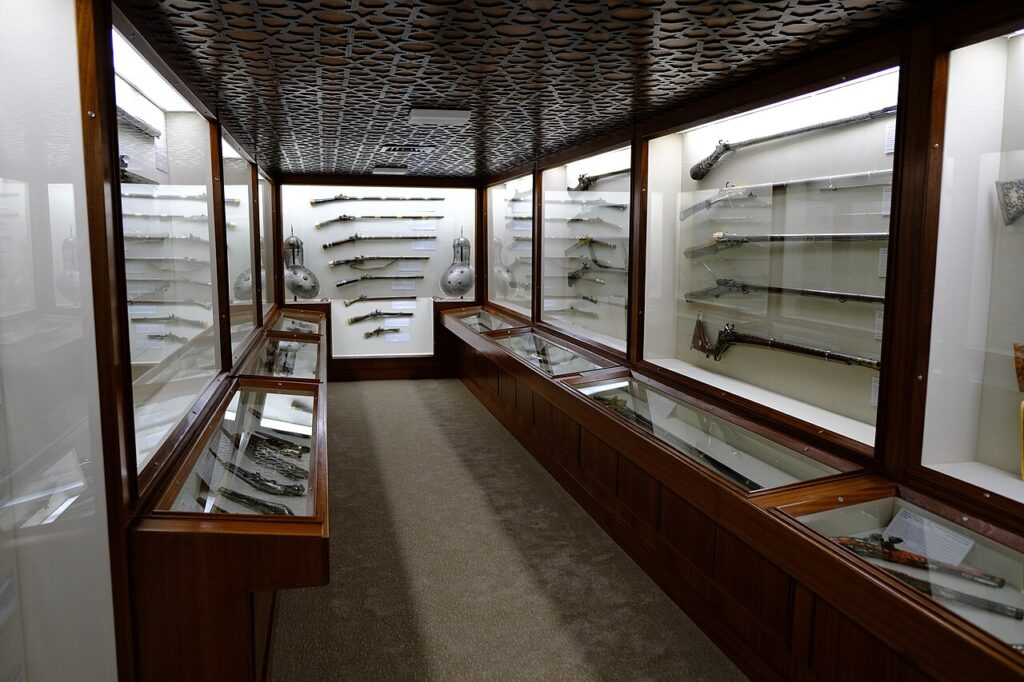
Representative photo: Museums serve as vital archives for industrial history, housing collections that chronicle the evolution of manufacturing and design. Photo: Tnrajab / Wikimedia Commons · CC BY-SA 4.0. Resized for display. Sources checked October 23, 2026.

Sources & further reading
- Collections - Cody Firearms Museum - Buffalo Bill Center of the West ↗
- Springfield Armory National Historic Site (U.S. National Park Service) ↗
- John Garand - Springfield Armory National Historic Site (U.S. National Park Service) ↗
- M1 Rifle variations and experimental models - Springfield Armory National Historic Site (U.S. National Park Service) ↗
- Exhibits - Cody Firearms Museums - Buffalo Bill Center of the West ↗
- F.A.Q. - Cody Firearms Museum - Buffalo Bill Center of the West ↗
Sources reviewed 2026-10-23.
Prepared for Gunfire Magazine with AI assistance from the linked source material and the publication’s editorial brief. This piece does not claim original interviews, on-site reporting or hands-on product testing.