

The Mechanics of Interchangeability
November often brings a natural cadence to the shooting sports, shifting the focus from active range time to the administrative and historical side of ownership. While many enthusiasts are currently engaged in Autumn Preservation: Auditing Your Personal Archive, there is significant value in widening that lens to understand the broader industrial history that shaped the tools in your safe. The story of American firearms is not merely a timeline of models; it is a narrative of manufacturing evolution, particularly the pursuit of interchangeable parts.
This pursuit found a pivotal home at Harpers Ferry in the early 19th century. In 1819, John H. Hall, a New England gunmaker, signed a contract with the War Department to produce 1,000 breechloading rifles—a design he had patented in 1811. Hall’s work at Harpers Ferry was transformative, as he spent years perfecting precision machinery that would move the industry away from the manual labor of skilled craftsmen toward a system of standardized production. As noted in the primary documentation from the John H. Hall - Harpers Ferry National Historical Park page, Hall’s goal was to fabricate arms exactly alike, ensuring a perfect observance of a model. By 1822, he wrote to Secretary of War John Calhoun, claiming he had succeeded in establishing methods for fabricating arms by the hands of common workmen, which served as a complete test of their conformity to an established model.
This era laid the foundation for the factory system in America. Hall’s development of drop-hammers, stock-making machines, and milling-machine precursors allowed for a level of consistency that had previously been impossible. Understanding this history provides context for the modern reliability we often take for granted. When we perform maintenance, we are beneficiaries of a manufacturing philosophy that prioritized uniformity and precision, a legacy that began in the machine shops of the early 1800s.
The Human Scale of Production
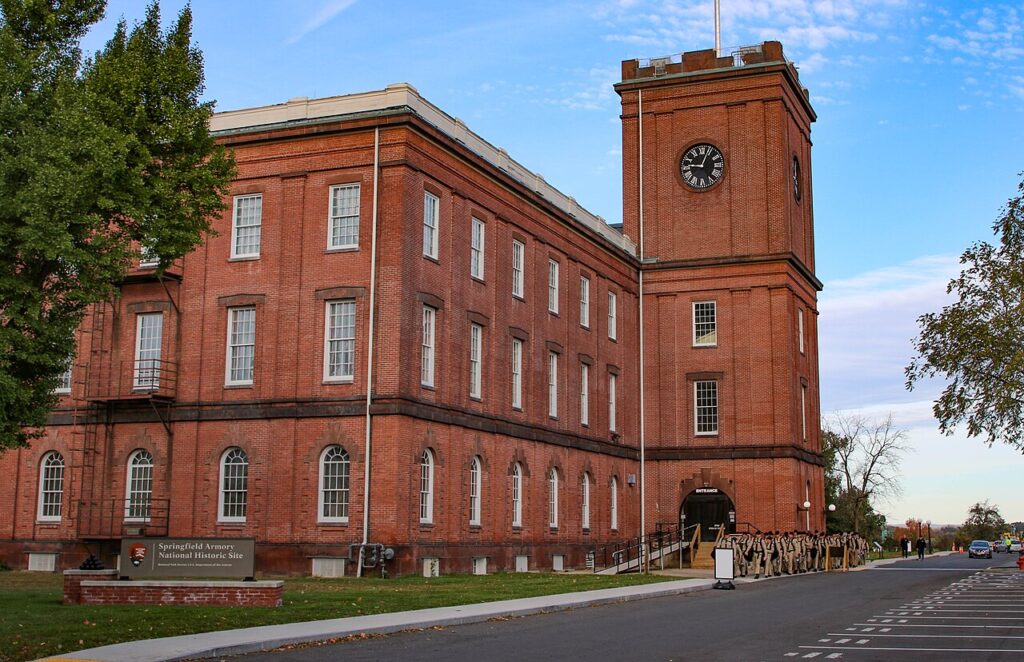
While the history of interchangeable parts focuses on the engineering, the history of the armory is also deeply human. The Springfield Armory, established in 1794 under George Washington, serves as a primary example of how industrial centers became pillars of their communities. The site’s evolution—from a federal arsenal storing revolutionary-era firearms to a massive production facility—reflects the changing needs of the nation. The Main Arsenal building, constructed between 1847 and 1850, remains a defining feature of the site, standing as a testament to the scale of these operations.
However, the history of production is often best understood through the people who kept the lines moving. During World War II, the demands of the war effort necessitated a massive expansion of the workforce. According to the Woman Ordnance Workers - Springfield Armory National Historic Site documentation, over 5,000 women—representing 45 percent of the Armory’s total workforce—were employed to produce M1 rifles and other essential equipment. These workers, many of whom had no prior industrial experience, utilized the high degree of mechanization to adapt quickly. This period highlights that the history of an armory is not just about the blueprints or the machines; it is about the thousands of individuals who contributed to the production totals.
Reflecting on this human infrastructure is a useful exercise during the off-season. Just as you might apply a Seasonal Maintenance Protocol: Beyond the Surface to your current gear, taking the time to read the history of these manufacturing centers helps one appreciate the labor and ingenuity embedded in the design of the tools we use today.
Reading the Museum as a Living Document
To fully grasp the arc of firearms history, one must look beyond the individual model names and into the collections that preserve the technological timeline. Institutions like the Cody Firearms Museum house thousands of objects that chronicle the development of firearms from early flintlocks to modern forms. Their collection demonstrates how the ideas of mass production and interchangeable parts, once experimental, became the standard for consumer goods worldwide.
Museum collections serve as a bridge between the abstract history of industrialization and the physical reality of the objects. When viewing these collections, it is helpful to look for the story behind the steel—the manufacturing marks, the variations in design, and the evidence of use. Museums do not just store objects; they preserve the context of how those objects were used, marketed, and perceived. For example, the inclusion of art and ephemera, such as manufacturer calendars or advertisements, provides a glimpse into how the firearms industry marketed itself to the public over the last century. By engaging with these archives, whether in person or through digital collections, we gain a more nuanced understanding of the firearms industry as a long-standing component of American history, rather than a static set of products.
As you plan your activities for the coming months, consider adding a historical audit to your schedule. Exploring the origins of your gear, the history of the factories that produced them, and the human effort behind their creation offers a deeper, more meaningful connection to the sport. History, after all, is the ultimate reference guide for understanding the present.
Representative photo: The historic Main Arsenal building at the Springfield Armory, a site central to the development of interchangeable parts and American industrial manufacturing. Photo: Victoria Stauffenberg / Wikimedia Commons · Public domain. Resized for display. Sources checked October 30, 2026.

Sources & further reading
- John H Hall - Harpers Ferry National Historical Park ↗
- Woman Ordnance Workers - Springfield Armory National Historic Site ↗
- Collections - Cody Firearms Museum ↗
- The Main Arsenal - Springfield Armory National Historic Site ↗
Sources reviewed 2026-10-30.
Prepared for Gunfire Magazine with AI assistance from the linked source material and the publication’s editorial brief. This piece does not claim original interviews, on-site reporting or hands-on product testing.