

Industrial Rhythms: The Winter Shift at the Armory
As the calendar turns to November, the frantic pace of the outdoor season begins to settle. For the historian and the collector, this transition offers a unique opportunity to shift focus from active use to preservation and study. Just as the great armories of the nineteenth and twentieth centuries adapted their operations to the demands of the seasons and the needs of the nation, the modern enthusiast can find value in treating their own collection with a similar level of administrative rigor. The history of American manufacturing, particularly in the realm of firearms, is a story of constant adaptation. Facilities like the Springfield Armory were not static; they were living, breathing industrial centers that had to evolve to survive.
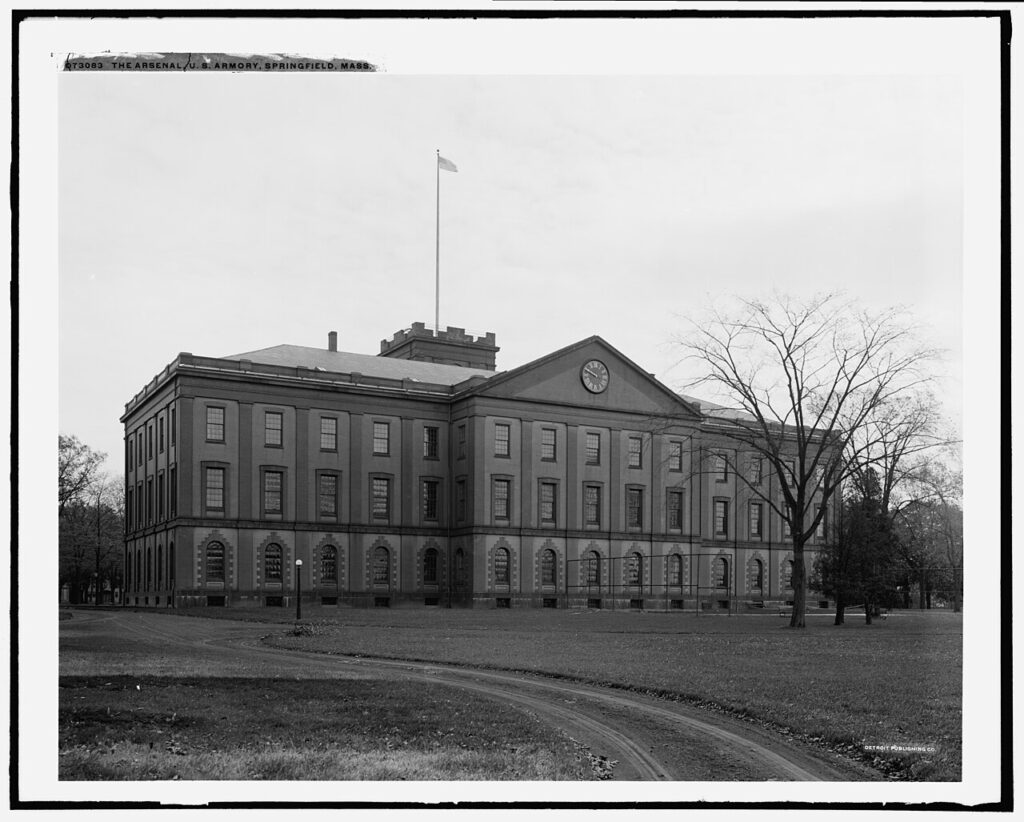
The Main Arsenal at Springfield, for example, serves as a physical record of this evolution. Constructed between 1847 and 1850, the building was designed to replace three previous storage structures. It was a massive undertaking that required constant management. According to the National Park Service, the building was adapted over decades to meet changing logistical needs, from the initial reliance on horse-drawn carriages to the installation of a loading dock for trucks in 1941 (Source: https://www.nps.gov/spar/learn/historyculture/the-main-arsenal.htm). Even the heating of the building was a late addition, with a steam plant not installed until 1906. This teaches us that even the most robust infrastructure requires thoughtful, seasonal attention. When we look at how these massive facilities managed the flow of thousands of firearms, we see that "storage" was never a passive act. Whether it was the transition from double-height racks to crates after the Civil War, or the internal renovations to accommodate new machinery, the history of the Arsenal is a history of adapting infrastructure to meet the reality of the day.
Interchangeability and the Human Element
The machines were only part of the story. The "American System of Manufacturing," characterized by interchangeable parts and precision machining, was powered by people. This system, which helped define the "Precision Valley" between New Haven, Connecticut, and Windsor, Vermont, relied on a workforce that was as adaptable as the machines they operated. At Springfield Armory, the workforce expanded dramatically during World War II, with 5,210 women—45% of the total staff—joining the production lines to meet wartime demands (Source: https://www.nps.gov/spar/learn/historyculture/woman-ordnance-workers.htm). This human element reminds us that behind every serial number is a production story. The "Woman Ordnance Worker" (WOW) initiative was about fostering an identity and pride in the work, complete with specific gear like bandanas and hats designed for safety around moving machinery.
This drive for precision was not limited to Springfield. At Harpers Ferry, John H. Hall pioneered the "uniformity principle" in the early 19th century, developing specialized machines—drop-hammers, stock-making machines, and drilling machines—that allowed for the fabrication of arms that were exactly alike. Hall’s success was attested to by Ordnance Department officials who noted that his manufactory had reached a level of perfection where almost everything was performed by machinery, leaving very little dependent on manual labor. This pursuit of interchangeability laid the foundation for the factory system that would eventually define American industrial history. Understanding this history provides context for the items we hold today. When we study the provenance of a firearm, we are also studying the labor, the industrial policy, and the societal shifts that made its creation possible.
Reading the Landscape of Preservation
How does this apply to the reader? The "off-season" is the ideal time to apply the lessons of the archive to your own space. Much like the work discussed in Autumn Preservation: Auditing Your Personal Archive, the goal is to view your collection through the lens of history and long-term care. It is not merely about maintenance; it is about stewardship. When we engage with these histories—whether by visiting sites like Coltsville, where Samuel Colt’s branding and industrial community still leave a mark on the Hartford skyline, or by reading the industrial history of places like Harpers Ferry—we learn to look at our own collections differently.
As noted in Autumn Research: The Archive as Industrial History, the archive is not just a place for dusty records; it is a tool for understanding the present. By documenting the "what" and the "why" of our own firearms, we contribute to the broader tapestry of industrial heritage. The blue onion dome at Coltsville, for instance, serves as a reminder of Samuel Colt’s legendary marketing and his desire to link his factory to his personal brand. It was a landmark that survived fire and reconstruction, symbolizing the resilience of the industry. As the winter months approach, consider this a time for the "archival" side of the hobby. Whether it is cataloging parts, researching the manufacturing history of a specific model, or simply ensuring that your storage environment is optimized for the coming season, the lessons of the great armories are clear: precision, documentation, and adaptation are the cornerstones of longevity.
Representative photo: The Main Arsenal building at Springfield Armory, illustrating the industrial infrastructure and architectural history discussed in the article. Photo: Detroit Publishing Company / Wikimedia Commons · Public domain. Resized for display. Sources checked October 28, 2026.

Sources & further reading
- Woman Ordnance Workers - Springfield Armory National Historic Site ↗
- The Main Arsenal - Springfield Armory National Historic Site ↗
Sources reviewed 2026-10-28.
Prepared for Gunfire Magazine with AI assistance from the linked source material and the publication’s editorial brief. This piece does not claim original interviews, on-site reporting or hands-on product testing.