

The Architecture of Industrial Authority
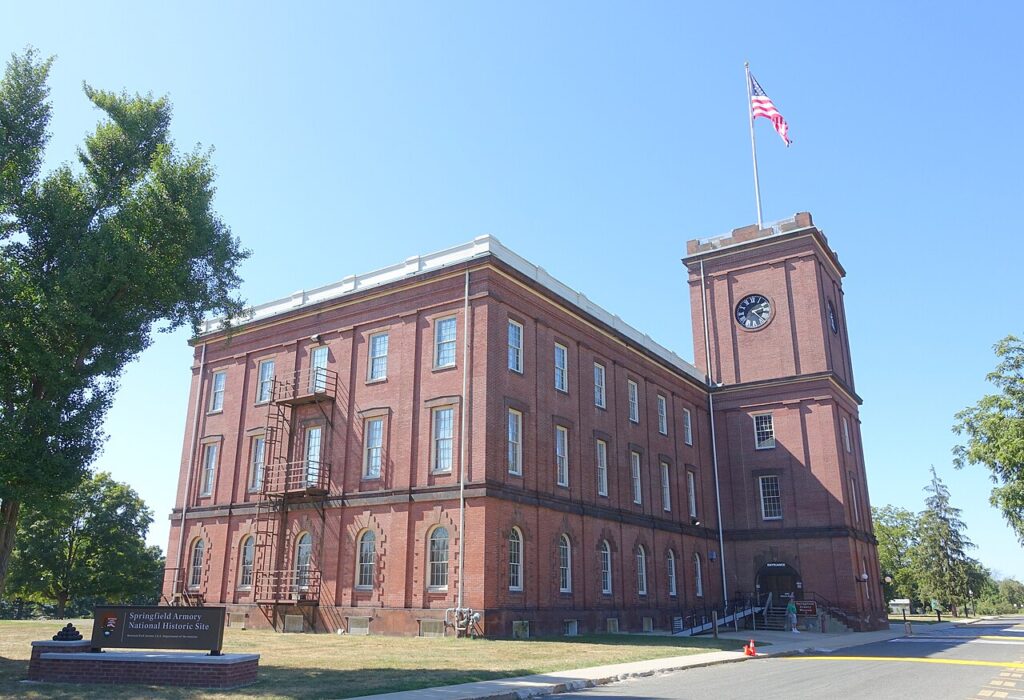
Firearms history is frequently interpreted through the lens of specific models, dates of manufacture, and individual technical innovations. However, the physical sites where these arms were produced offer a different, often more expansive, historical record. The architecture of early American armories was not merely functional; it was an expression of military power, industrial branding, and the evolving needs of the federal government. At the Springfield Armory National Historic Site, the Main Arsenal (Building 13) stands as a testament to this intent. Constructed between 1847 and 1850 under the direction of Major James W. Ripley, the building was designed to command the Armory complex. As noted by the National Park Service in their documentation of The Main Arsenal - Springfield Armory National Historic Site, the structure replaced three earlier storage buildings and was built on the site of the previous commanding officer's house. Its imposing presence, complete with a clock tower and expansive interior capable of storing 300,000 firearms, reflected an authoritarian and practical nature intended to impress upon the landscape the power of the United States military.
This drive for industrial identity was not unique to federal sites. In Hartford, Connecticut, Samuel Colt utilized architecture to establish a distinct corporate brand. The blue onion dome at his factory, completed in 1855, served as a landmark that advertised both the company and Colt’s own international connections, particularly his travels through Russia. Unlike the standardized, functionalist approach seen at federal arsenals, Colt’s dome was a deliberate marketing tool. As explored in Beyond the Display: How Provenance Reveals History, understanding the context of these sites allows researchers to see beyond the objects themselves to the industrial philosophy that created them. The dome, topped with a rampant colt on a globe, became a symbol of the "American System of Manufacturing," which combined interchangeable parts, precision machining, and the assembly line to transform the industry.
Archaeology as a Primary Source
While standing structures provide a clear view of industrial intent, the archaeological record offers a more granular look at the daily realities of production. At Harpers Ferry National Historical Park, extensive archaeological investigations conducted between 2005 and 2012 have reshaped the understanding of how weapons were manufactured in the 19th century. According to the National Park Service report on Archeology at the US Armory, the investigations focused on the remains of the Warehouse and the Smith and Forging Shop, as well as the Armory’s waterpower infrastructure.
These excavations provided physical evidence of processes that were often poorly documented in historical texts. For example, archaeologists recovered a cache of 75 to 100 three-piece, long-range rear sights for the U.S. Model 1855 rifle, offering insight into the production of small, intricate components. Furthermore, the findings highlighted the logistical challenges early armorers faced, particularly regarding waste disposal. The discovery of scrap metal and slag used in construction projects near the Armory buildings suggests that waste management was an ongoing, practical problem for the facility. By mapping these features, including the complex tailrace tunnels that moved water between the canal and the river to power machinery, researchers have gained a better understanding of how the Armory evolved from a small-scale operation in 1799 to a full-fledged industrial center by the 1840s.
The Human Infrastructure of Production
Behind the architecture and the machinery was a workforce that adapted to the shifting demands of the nation. The expansion of armories during times of crisis necessitated rapid changes in labor demographics. During World War II, the Springfield Armory saw a massive influx of new workers to meet the demand for M1 rifles. At its wartime peak, women comprised 45% of the Armory’s workforce, totaling 5,210 individuals. To facilitate this transition, the War Department implemented the Woman Ordnance Worker (WOW) concept, using posters, badges, and specific attire—such as bandanas and hats designed to keep hair away from moving machinery—to foster a sense of pride and identity among the new workers.
Similarly, the industrial community at Coltsville was designed to encompass more than just the factory floor. Samuel Colt established an environment that included worker housing, educational opportunities, and social halls, creating a self-contained community. After his death in 1862, his wife, Elizabeth Colt, took ownership of the company and maintained the philosophy of technological innovation while overseeing the complex for 39 years. These human stories, preserved through oral histories and archival records, are essential for bringing the industrial narrative back to a human scale. As discussed in The story behind the steel., the study of these sites is not just about the finished products, but about the people, the labor, and the communities that built the foundation for modern manufacturing. By examining these sites—whether through the standing clock tower in Springfield, the archaeological remnants of Harpers Ferry, or the blue dome of Hartford—researchers can construct a more comprehensive history of the American industrial experience.
Representative photo: The Main Arsenal at the Springfield Armory, constructed in 1850, serves as a primary example of how federal armory architecture was designed to project military authority and industrial power. Photo: Daderot / Wikimedia Commons · CC0. Resized for display. Sources checked October 24, 2026.

Sources & further reading
- The Main Arsenal - Springfield Armory National Historic Site (U.S. National Park Service) ↗
- Archeology at the US Armory (U.S. National Park Service) ↗
Sources reviewed 2026-10-24.
Prepared for Gunfire Magazine with AI assistance from the linked source material and the publication’s editorial brief. This piece does not claim original interviews, on-site reporting or hands-on product testing.