

The Administrative Pivot: Planning for the New Cycle
Late October serves as a critical administrative pivot point for the shooting sports industry. While the field of play captures the immediate attention of spectators, the infrastructure behind the sport undergoes a rigorous review during this season. As organizations look toward the 2027 calendar, the focus shifts from the immediate results of competition to the architecture of the sport itself. This shift is essential, as the transition from an announcement to a reported story requires a clear understanding of the underlying governance structures that make competition possible, as discussed in From announcement to reported story.
Peter Underhill, the ISSF Sport Director, has articulated a vision for this readiness that prioritizes pragmatic delivery. In his assessment of the sport's positioning, he emphasizes that the future relies on a "less is more" approach to the sporting calendar, favoring fewer events of higher quality over a sprawling, packed schedule that can be difficult for smaller teams to manage financially (https://www.issf-sports.org/news/4542). This administrative discipline is not merely about logistics; it is about sustainability and ensuring that the sport remains viable within the broader international sporting landscape. Underhill’s five-point plan—encompassing event formatting, equipment control, world rankings, calendars, and sustainability—reflects a broader trend toward professionalizing the administrative side of the sport to match the precision required on the firing line. Understanding these administrative layers is as critical as understanding the technical provenance of the equipment itself, a topic explored in The story behind the steel.
Institutionalizing Inclusion: Beyond Symbolic Representation
As governing bodies audit their operations, the conversation around inclusion has moved from campaign-based initiatives to structural requirements. Melis Giraud, an ISSF Executive Committee Member and Chair of the DEI Ad Hoc Committee, argues that true inclusion in shooting sport is not simply about numbers; it is about legitimacy and voice (https://www.issf-sports.org/news/4947). For Giraud, inclusion becomes sustainable only when it is embedded into the structural fabric of the organization—specifically through education, appointments, and leadership development. This perspective is vital for those studying the history of the industry, as understanding the human infrastructure is just as important as reading the technical specifications of the equipment.
This structural approach is echoed by elite athletes who are increasingly involved in governance. Fernanda Russo, a competitor in the Women’s Air Rifle events, notes that the evolution of opportunities for women—such as the introduction of mixed team events—has been significant, but the work must continue at the grassroots level (https://www.issf-sports.org/news/4948). The goal is to ensure that elite-level balance is a natural reflection of inclusive systems built from the beginning. Adriana Ruano, the first athlete to secure an Olympic gold medal for Guatemala, reinforces this, stating that visibility in leadership positions is fundamental (https://www.issf-sports.org/news/4955). When young athletes see women in roles such as technical officials, federation leaders, and coaches, it expands their sense of what is possible, proving that decision-making spaces should be defined by capacity and preparation rather than gender.
Bridging Organizations: The Model of Collaboration
The final pillar of this seasonal audit involves the integration of disparate organizations. The collaboration between the International Shooting Sport Federation (ISSF) and the International Military Sports Council (CISM) serves as a primary example of how organizations can align their goals to strengthen the sport. Walter Borghino, who serves as the ISSF Ambassador within CISM, has been instrumental in formalizing this relationship, which focuses on educational initiatives, the training of officials, and the development of Para-shooting (https://www.issf-sports.org/news/4704).
Borghino’s work highlights the importance of creating formal bridges between civilian and military sporting bodies. By opening these channels, organizers who previously operated in silos can now access support and shared knowledge, which is critical for the long-term health of the sport. This collaborative model demonstrates that organizational readiness is not just an internal task; it requires active engagement across borders and sectors. As the industry moves into the next season, the focus remains on these administrative foundations—ensuring that the governing systems are as precise, disciplined, and resilient as the athletes they support. This requires constant refinement, much like the process an athlete goes through when managing their own performance—accepting mistakes, trusting the process, and returning to the core fundamentals (https://cms.usashooting.org/sagen-maddalena-earns-silver-olympic-medal/).
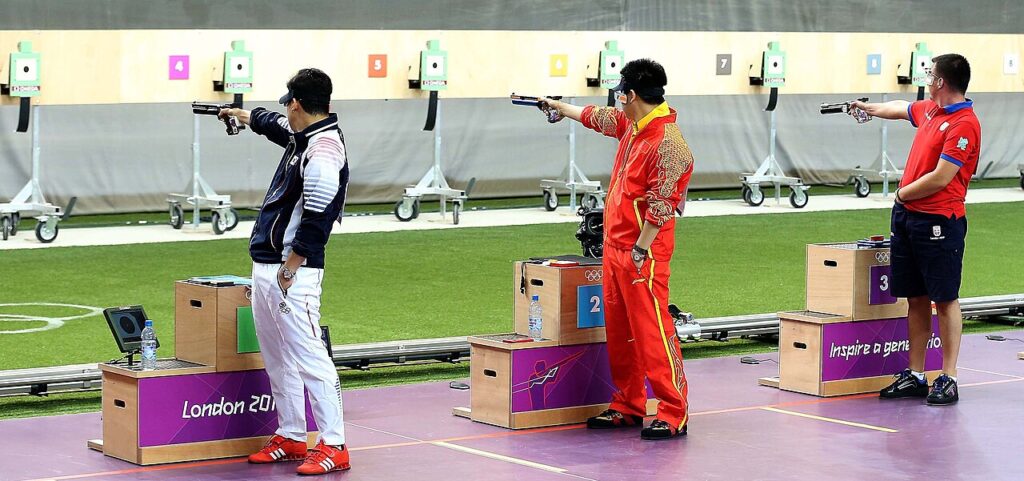
Representative photo showing the structured, disciplined environment of competitive shooting, reflecting the administrative precision and organizational governance discussed in the article. Photo: Korea.net / Korean Culture and Information Service (Korean Olympic Committee) / Wikimedia Commons · CC BY-SA 2.0. Resized for display. Sources checked October 26, 2026.

Sources & further reading
- ISSF - International Women's Day series: Melis Giraud on leadership, inclusion and the future of women in shooting sport ↗
- ISSF - International Women’s Day series: Fernanda Russo on precision, equality and leadership ↗
- ISSF - International Women’s Day series: Adriana Ruano, making history for Guatemala and women in shooting sport ↗
- ISSF - Interview: New ISSF Sport Director Peter Underhill ↗
- Sagen Maddalena Earns Silver Olympic Medal: First U.S. Shooting Medal at Paris Games | USA Shooting ↗
- ISSF - Interview with ISSF Ambassador Walter Borghino ↗
Sources reviewed 2026-10-25.
Prepared for Gunfire Magazine with AI assistance from the linked source material and the publication’s editorial brief. This piece does not claim original interviews, on-site reporting or hands-on product testing.