

RESEARCH-BASED PRODUCT FEATURE
Based on published manufacturer specifications. Gunfire Magazine has not physically tested this product for this article.
The Seasonal Transition as an Administrative Cycle
As the calendar turns from October into November, the operational tempo for many firearm owners undergoes a predictable shift. This transition period serves as a vital junction for managing a collection, moving from the active usage patterns characteristic of the late-season months toward a phase defined by storage, review, and long-term planning. Treating your rifle collection as a managed inventory rather than a static group of objects allows for a higher standard of oversight. Just as an industrial armory maintains a ledger to ensure accountability and operational readiness, your personal archive requires a structured approach to remain current and secure.
A formal audit begins with administrative clarity. Before inspecting the physical condition of your firearms, verify that your records are complete and organized. This includes confirming that your serial numbers are documented, purchase records are secured, and your inventory list reflects the current state of your collection. As noted in The Seasonal Administrative Readiness: A Rifle Audit, administrative rigor is the foundation of responsible ownership. This phase of the audit is not merely about paperwork; it is about establishing a reliable baseline of information that supports every other aspect of ownership, from insurance documentation to future maintenance planning.
Leveraging Manufacturer Documentation for Asset Health
Once your administrative house is in order, the next step in the audit protocol involves leveraging manufacturer resources to confirm the technical status of your equipment. A key component of research-based ownership is the ability to access and interpret the specific documentation provided by the manufacturer for each firearm in your collection. Whether you own a precision bolt-action rifle, a rimfire trainer, or an autoloading platform, the manufacturer’s original documentation is the primary authority on that unit's history and maintenance requirements.
For instance, current research into the manufacturer’s catalog reveals a diverse array of platforms, ranging from the Ruger Precision Rifle and the Ruger American Rifle series to the enduring 10/22 and Mini-14 systems (Source: Ruger Rifle Product Overview). Each of these platforms possesses distinct characteristics and, consequently, distinct requirements for long-term care and storage. Utilizing official manufacturer resources—such as serial number lookups and digital copies of instruction manuals—is a vital step in your audit. As highlighted by the manufacturer, they have operated for over 75 years as "Arms Makers for Responsible Citizens," a motto that underscores the importance of the relationship between the owner and the manufacturer’s provided technical guidance (Source: Ruger Firearms). By ensuring you have the latest information for each model, you transform your audit from a simple inspection into a comprehensive verification of your collection’s status.
Storage Integrity and Long-Term Asset Protection
The final phase of a November audit focuses on the integration of your gear into a seasonal storage and maintenance cycle. This is the time to evaluate the environment in which your rifles are kept, ensuring that your storage solutions—whether safes or cases—are functioning as intended and providing the necessary protection against environmental factors like humidity and temperature fluctuations. As discussed in Autumn Maintenance: A Seasonal Protocol for Gear Longevity, the goal of this process is to ensure that your equipment remains in a state of verified readiness throughout the winter months.
This cycle of readiness also extends to your supporting infrastructure, such as optics, mounts, and transport cases. If your rifles are equipped with optical sights, verify that mounting hardware remains secure and that lens integrity is maintained. A comprehensive audit considers the rifle not just as a standalone unit, but as part of an integrated system that includes its storage container, its documentation, and its dedicated maintenance tools. By applying this level of corporate-style rigor to your personal collection, you ensure that your equipment is ready for the next cycle, and your administrative records serve as a reliable asset rather than a source of uncertainty. This proactive approach turns the year-end transition into a constructive period of preparation, setting the stage for a more organized and informed approach to the upcoming year.
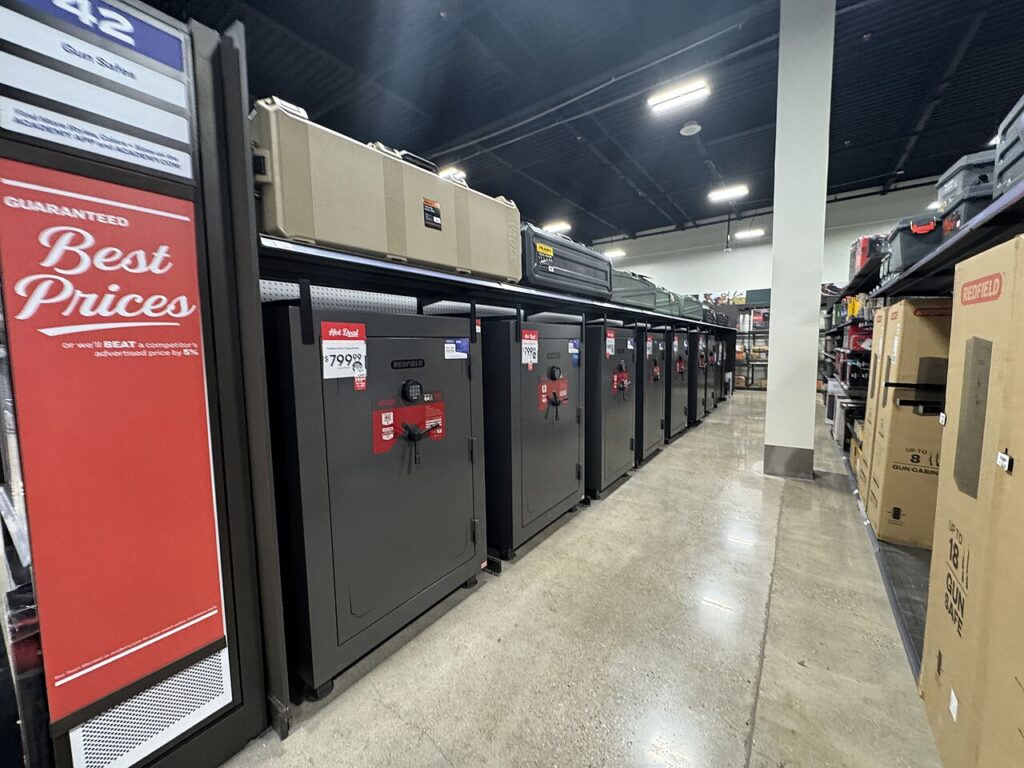
Representative photo: A retail display of gun safes illustrating the type of secure storage solutions essential for maintaining the integrity of a firearm collection during seasonal transitions. Photo: Missvain / Wikimedia Commons · CC BY 4.0. Resized for display. Sources checked October 30, 2026.

Prepared for Gunfire Magazine with AI assistance from the linked source material and the publication’s editorial brief. Specifications and manufacturer claims are attributed to their original sources.