

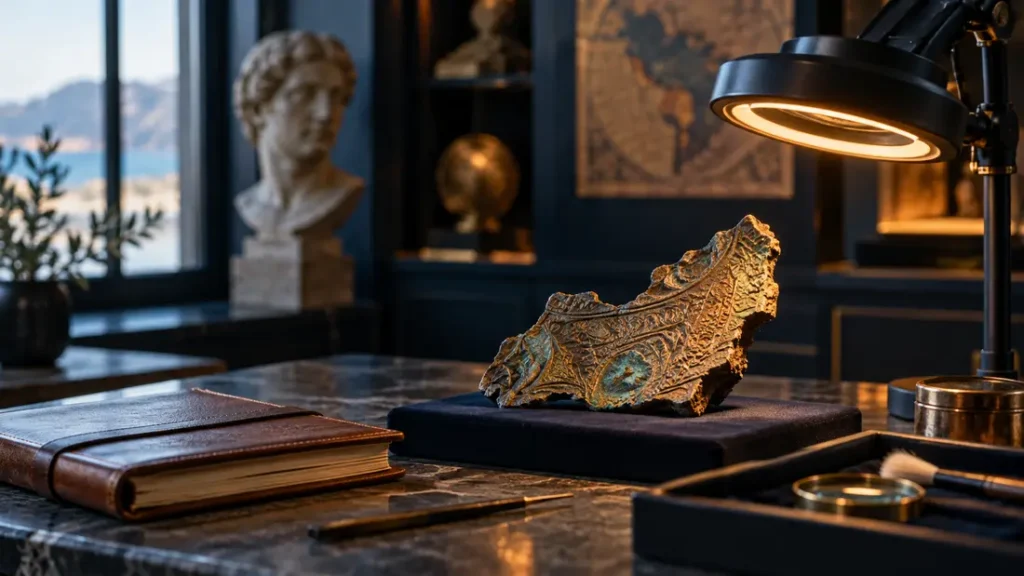
An old object can invite an immediate cosmetic impulse: make it cleaner, brighter or more complete. Museum practice begins with a different question—what evidence might be lost through an intervention? The National Park Service’s Conserve O Grams provide focused guidance on the care of collections across many materials and conditions. Explore the NPS conservation resources.
This feature does not give firearm-restoration, repair or cleaning instructions. Its subject is the editorial distinction between preservation and improvement. A surface change may make an object more attractive to one viewer while altering information that a historian or conservator would want to examine.
For a magazine, that means avoiding casual before-and-after narratives that assume a newer appearance is always the better outcome. A responsible story should ask what the object is, what is known about its history, what a qualified specialist recommends and how any intervention is documented. The answers can differ between objects that initially look similar.
Documentation is part of the story. Photographs, condition notes and provenance records give future researchers a way to understand what existed before a change. Without them, an intervention can become difficult to distinguish from the object’s earlier history. An appealing final image should not erase the process that produced it.
The NPS resources are a starting point for understanding why collections care is specialized work. They do not make a general reader a conservator or establish the appropriate treatment for a particular artifact. Readers considering work on historically significant material should consult a qualified professional. A magazine can serve them best by explaining the questions, identifying the limits of its own expertise and treating an object’s history as something to investigate before deciding how it ought to look.
Continue with Special Features and read our editorial standards.
Prepared for Gunfire Magazine with AI assistance from the linked source material and the publication’s editorial brief. This piece does not claim original interviews, on-site reporting or hands-on product testing.