

The Transition: From Active Use to Stewardship
As the calendar turns toward November, the rhythm of the shooting sports undergoes a significant shift. For many, the peak of field activity begins to recede, replaced by the necessary logistics of storage and preparation for the next cycle. This transition period is not merely a cessation of activity, but an opportunity for a different kind of engagement: the stewardship of your personal armory. The U.S. Fish and Wildlife Service’s National Survey of Fishing, Hunting, and Wildlife-Associated Recreation (FHWAR) provides a data-backed reminder that participation is a multi-faceted cycle of engagement, one that extends well beyond the time spent in the field or at the range. By viewing this period through the lens of an archive or a managed collection, owners can transition from passive storage to active stewardship.
This shift is explored in depth in Autumn Maintenance: A Seasonal Protocol for Gear Longevity, which highlights that the off-season is the ideal time to evaluate the condition of equipment before it is stowed away. Rather than viewing maintenance as a chore, consider it an audit of your personal collection’s operational readiness. This mindset mirrors the professional standards used by institutions to ensure that objects remain viable for future use, whether that use is display, study, or continued service.
Applying Museum Standards to Private Storage
When institutions manage historical collections, they rely on technical guidance to mitigate the agents of deterioration, such as humidity, temperature fluctuations, and improper handling. The National Park Service (NPS) provides a wealth of this information through its NPS Conserve O Grams, a collection of technical leaflets designed for staff responsible for collections care. While these leaflets are written for museum professionals, the principles they outline—such as the importance of stable microenvironments and the risks of improper storage materials—are directly applicable to the private owner.
For instance, the guidance on selecting storage furniture and monitoring environmental conditions underscores that “out of sight” is not equivalent to “securely stored.” A container that is not properly ventilated or that uses chemically unstable materials can accelerate the degradation of metal, wood, and leather components over time. By adopting a systematic approach to storage—treating your safe or storage area with the same rigor as an institution treats a collection—you preserve the integrity of the items. This is not about cosmetic improvement, but about structural preservation. As noted in Autumn Preservation: Auditing Your Personal Archive, the goal is to ensure that when the next season arrives, the equipment is not only functional but maintains the characteristics that made it valuable to begin with.
Documenting the Collection: Beyond the Model Name
A collection is more than the sum of its parts; it is a repository of history and utility. To understand the significance of this, one can look to the Springfield Armory National Historic Site and its Main Arsenal building. The history of this site reveals that a building can be an archive, where the storage of firearms was not just a logistical necessity but a reflection of the industrial and military priorities of the time. The Main Arsenal was not merely a warehouse; it was a carefully managed facility where thousands of items were organized, stored, and eventually transitioned into crates for distribution.
For the private collector, documenting the collection involves more than just keeping a list of serial numbers. It involves understanding the provenance and the specific context of each item. When you perform a seasonal audit, take the time to record the condition, the history of the item’s use, and any maintenance performed. Just as the Springfield Armory records provide researchers with a way to follow the evidence of technological innovation and manufacturing history, your personal records serve as a narrative of your own engagement with the sport. This documentation adds a layer of value that persists long after the season ends. By treating your personal armory as an archive, you preserve not only the equipment but the history of your participation, ensuring that the story behind the steel remains intact for the future.
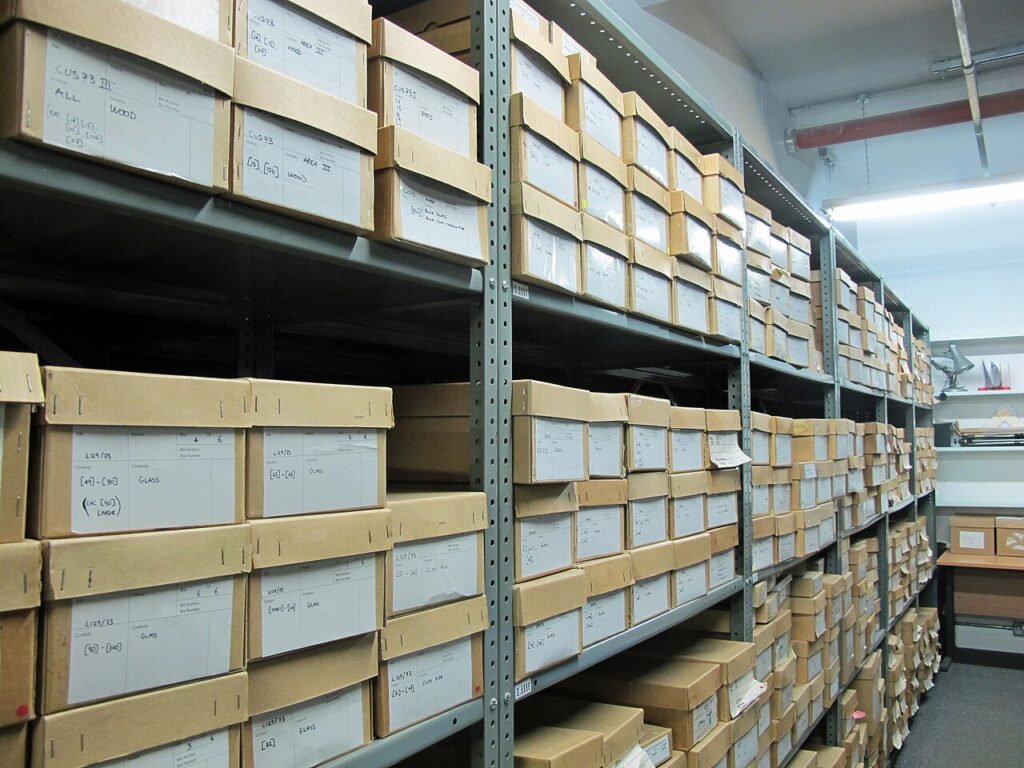
Representative photo illustrating the principles of organized, systematic storage and stewardship, mirroring the professional standards recommended for managing a personal collection. Photo: Maggie Jones / Wikimedia Commons · Public domain. Resized for display. Sources checked October 29, 2026.

Sources & further reading
- National Survey of Fishing, Hunting, and Wildlife-Associated Recreation (FHWAR) | U.S. Fish & Wildlife Service ↗
- NPS Conserve O Grams - Museums & Collections (U.S. National Park Service) ↗
- The Main Arsenal - Springfield Armory National Historic Site (U.S. National Park Service) ↗
Sources reviewed 2026-10-29.
Prepared for Gunfire Magazine with AI assistance from the linked source material and the publication’s editorial brief. This piece does not claim original interviews, on-site reporting or hands-on product testing.